


Corrosion of stainless steel — causes, types and prevention
Crevice, pitting and galvanic corrosion. How chlorides and temperature act.
Why stainless steel corrodes
Stainless steel is not non-corroding — it is corrosion-resistant. A passive layer of chromium oxide (Cr2O3) protects the surface, but it can be broken down by:
- Chlorides (above 250 mg/l for drinking water)
- Iron contamination (tools, carbon steel filings)
- Stagnant water (insufficient flushing)
- Incorrect disinfection (excessive chlorine)
Pitting corrosion
A localised attack by chlorides on the passive layer. Small but deep pits form.
Prevention:
- Use 316L where the chloride content exceeds 200 mg/l
- Flush regularly (at least once a week when the system is not in use)
- Residual chlorine during disinfection < 2 ppm
- Medium temperature < 50 °C in chloride-bearing environments
Crevice corrosion
It forms in enclosed spaces (under a seal, in gaps) where chlorides accumulate and the pH falls.
Prevention:
- Press the fittings correctly (no gaps)
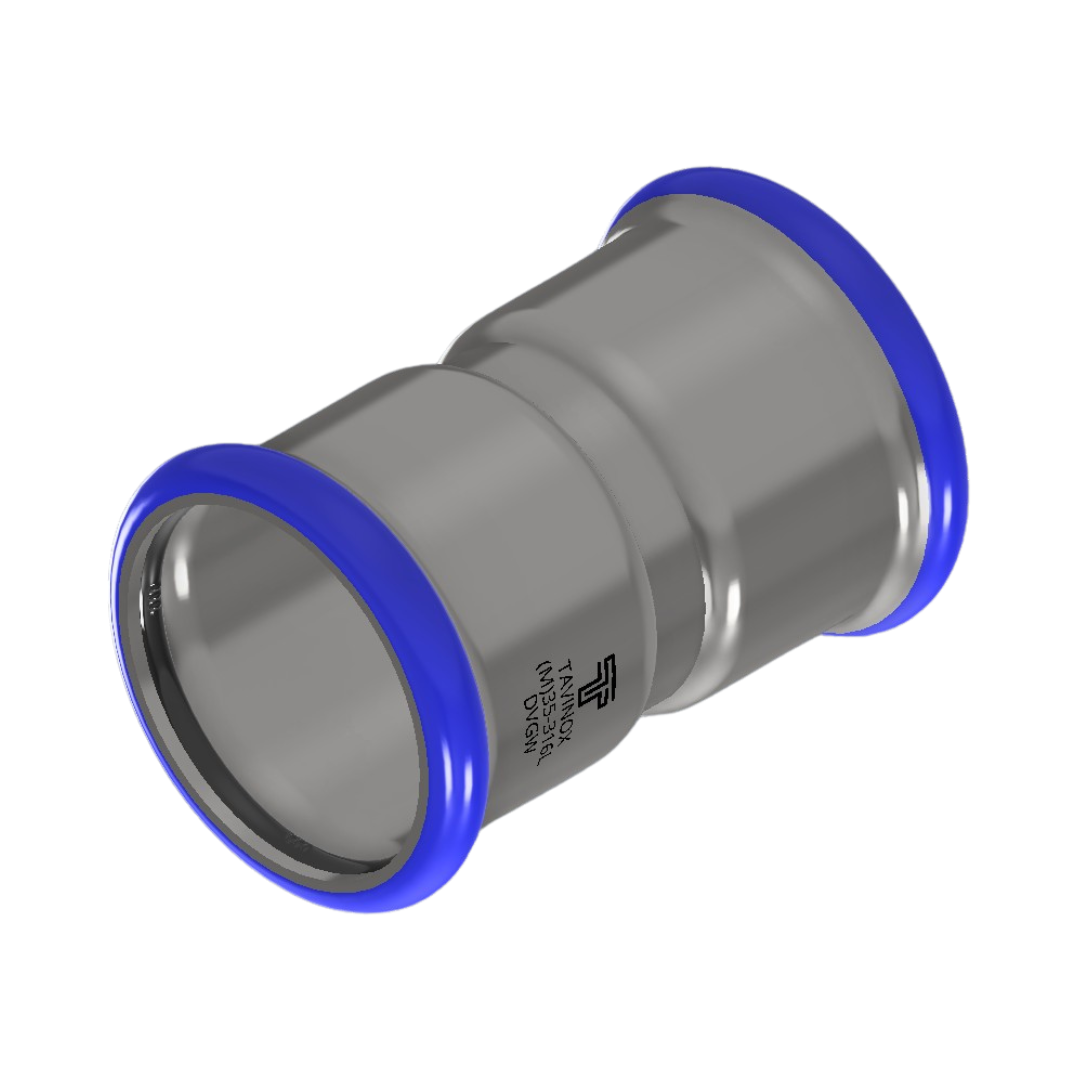
- Quality O-rings (OK02 EPDM with silicone lubrication)
- Avoid welding on site (unless it is unavoidable)
Galvanic corrosion
It occurs when two metals with different electrochemical potentials are in direct contact in the presence of an electrolyte (water).
Must not be joined directly to stainless steel:
- Carbon steel: NOT ALLOWED — the highest risk, the carbon steel corrodes quickly
- Galvanised steel: NOT ALLOWED — the zinc dissolves and the protection is gone
- Copper and its alloys (bronze, brass): NOT RECOMMENDED — copper is the more noble metal, so the stainless steel corrodes in the contact zone. A dielectric nipple is required
- Aluminium: PROBLEMATIC — a large difference in potentials
Safe combinations:
- Plastic: SAFE (non-conductive — no galvanic cell forms)
The solution when connecting to another metal: a dielectric nipple (a plastic spacer at least 50 mm long) or an insulated transition piece.
Would you like the TAVINOX PRESS installer certificate?
Complete the online training and get a certificate valid for 2 years.