


Drinking water distribution
Stainless steel protects what it should. Water quality from mains to final connections.
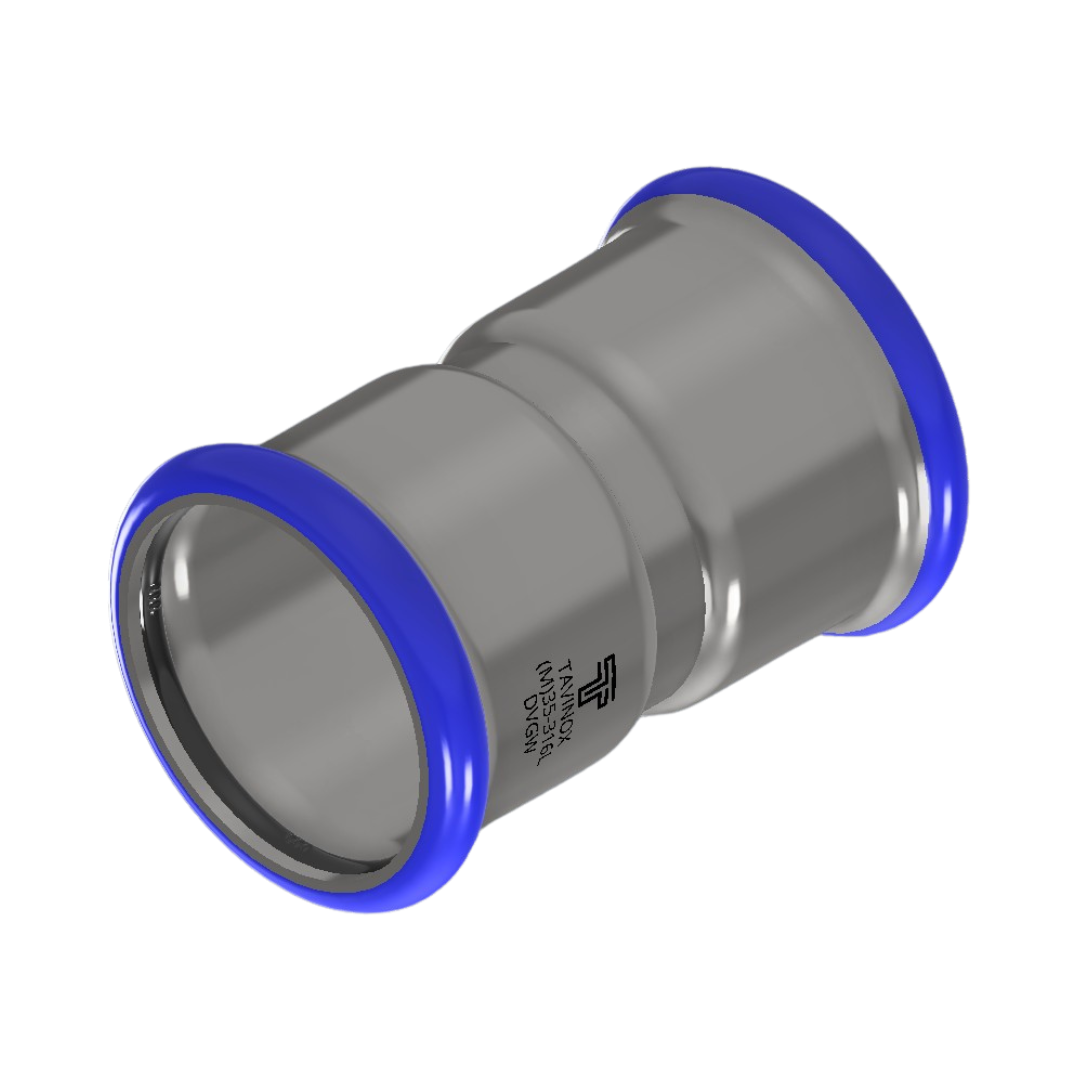
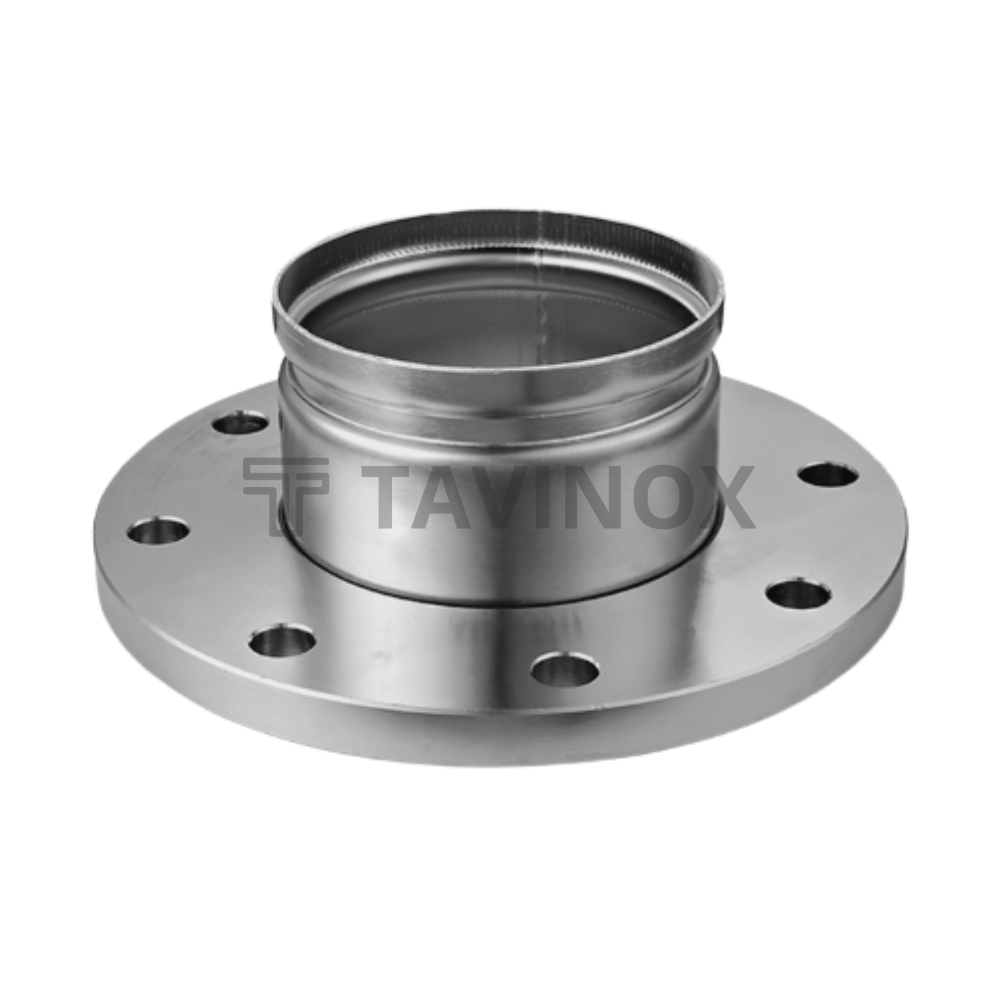
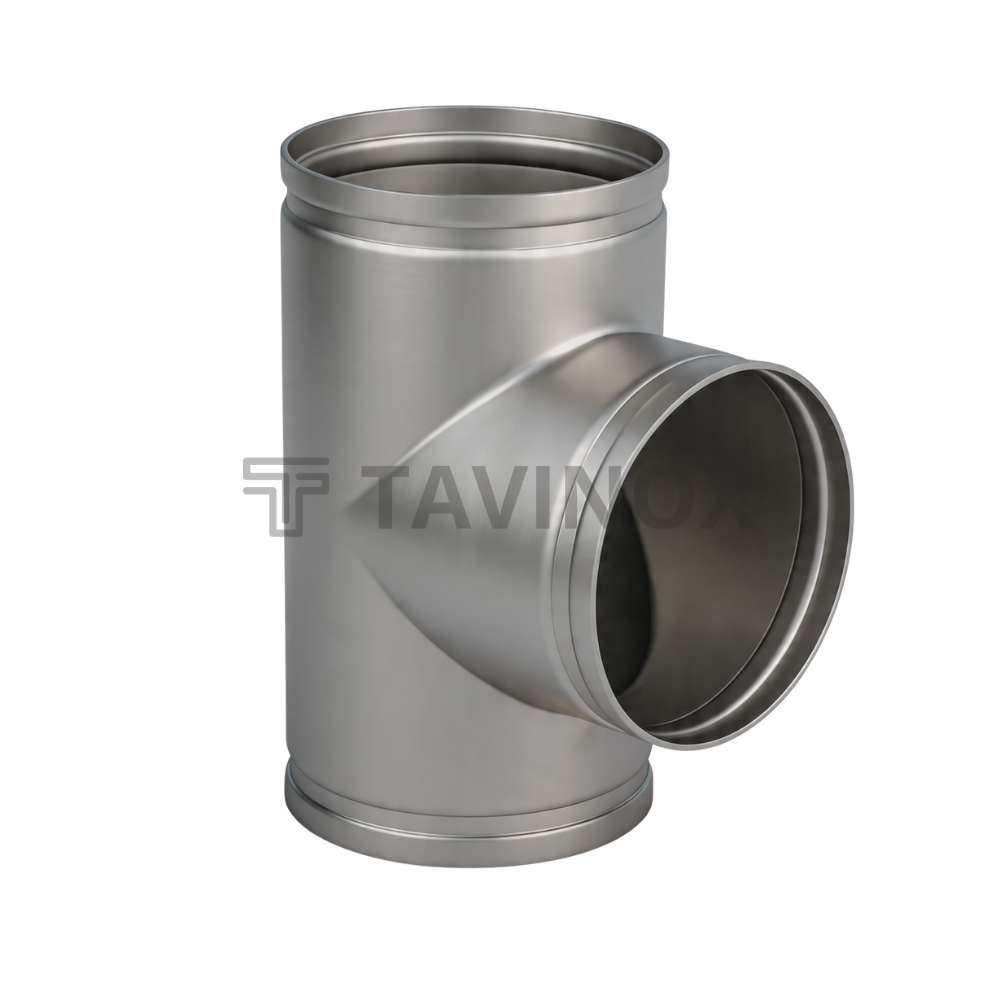
TAVINOX PRESS is a stainless steel press system of fittings and pipes made from stainless steel AISI 316L / 304L with DVGW and ITC certifications, offering exceptionally high corrosion resistance.

Why stainless steel for drinking water distribution
In drinking water installations, price and installation speed are not the only factors. Hygienic suitability, long-term material stability and operational reliability are equally critical. Stainless steel meets these requirements by its very nature, and the TAVINOX PRESS system is designed so that the installation is as reliable as the material itself. Tested and certified for drinking water.
Hygienic safety
Does not release heavy metal ions into the water. Unlike copper and galvanised steel, it preserves drinking water quality unchanged.
Biofilm resistance
The smooth stainless surface limits conditions for biofilm formation and contributes to long-term operational stability.
No internal corrosion
Unlike galvanised steel, it is not subject to dezincification or scale build-up. The flow cross-section remains unchanged.
Chemical resistance
316L grade resists chemical cleaning of distribution systems. Essential where hygiene regimes and Legionella prevention are applied.
Long service life
When operated within EN 806 conditions, the service life of stainless steel pipework exceeds the designed lifespan of the building.
Thermal stability
Handles both hot and cold water including circulation systems without material degradation.
Designed for all building types
 Apartment buildings
 Family houses
 Hotels
 Hospitals
 Industrial facilities
 Public buildings
Looking for other applications of the TAVINOX PRESS stainless steel system?
Other application areasTechnical parameters for drinking water distribution
| Parameter | Value |
|---|---|
| Operating pressure (cold water) | 16 bar / max. 25 °C |
| Operating pressure (hot water, DHW) | 10 bar / max. 95 °C |
| Fitting material | AISI 316L (1.4404) |
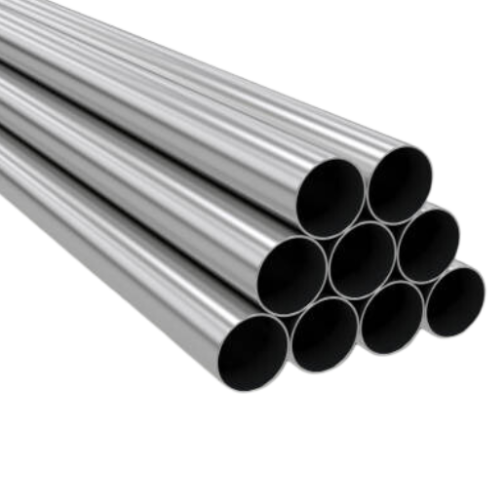
| Tube material | AISI 316L / AISI 304L |
| Size range – press-fit | 15–108 mm |
| Size range – grooved | 133–323 mm |
| Press profile | M |
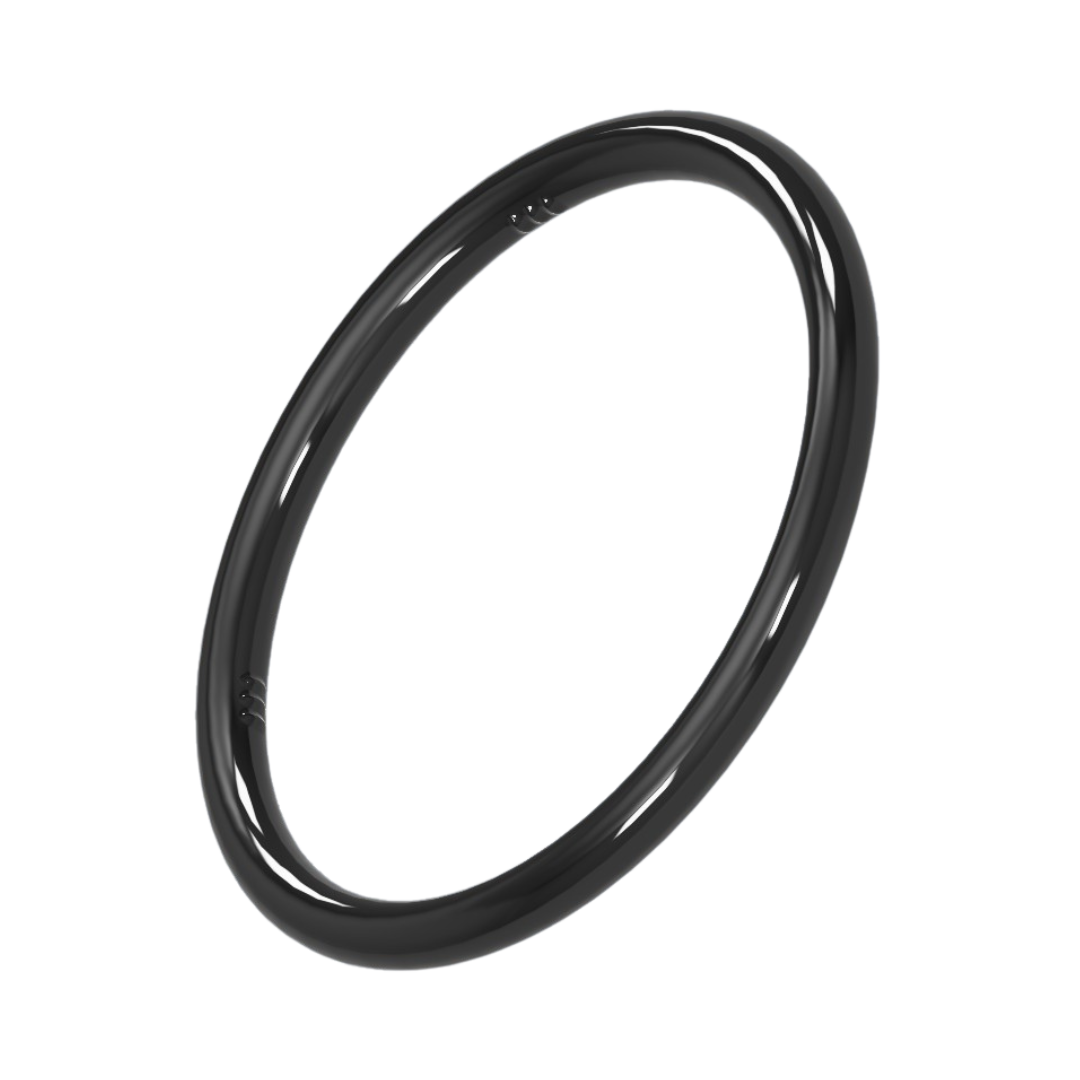
| Seal | EPDM (−55 °C to +120 °C) |
| Chloride limit | 250 mg/l |
| Unpressed-joint detection | Leak Detect (from 0.1 bar) + blue indicator ring |
Connection to other materials: Combination with copper and other stainless steels is unrestricted. With carbon steel only via a brass dielectric nipple (min. 50 mm), with the flow always running from carbon steel to stainless steel. The complete parameters of the TAVINOX PRESS system are given in the technical manual.
Installation procedure
How to press a TAVINOX PRESS 316L stainless steel joint correctly
Step-by-step procedure for pressing a TAVINOX PRESS stainless steel press fitting onto a 316L stainless steel tube. Complies with TAVINOX technical instruction TI-001-EU and with EN 10312. The joint is certified for drinking water (DVGW), heating and fire protection pipework (PAVUS).
- 1
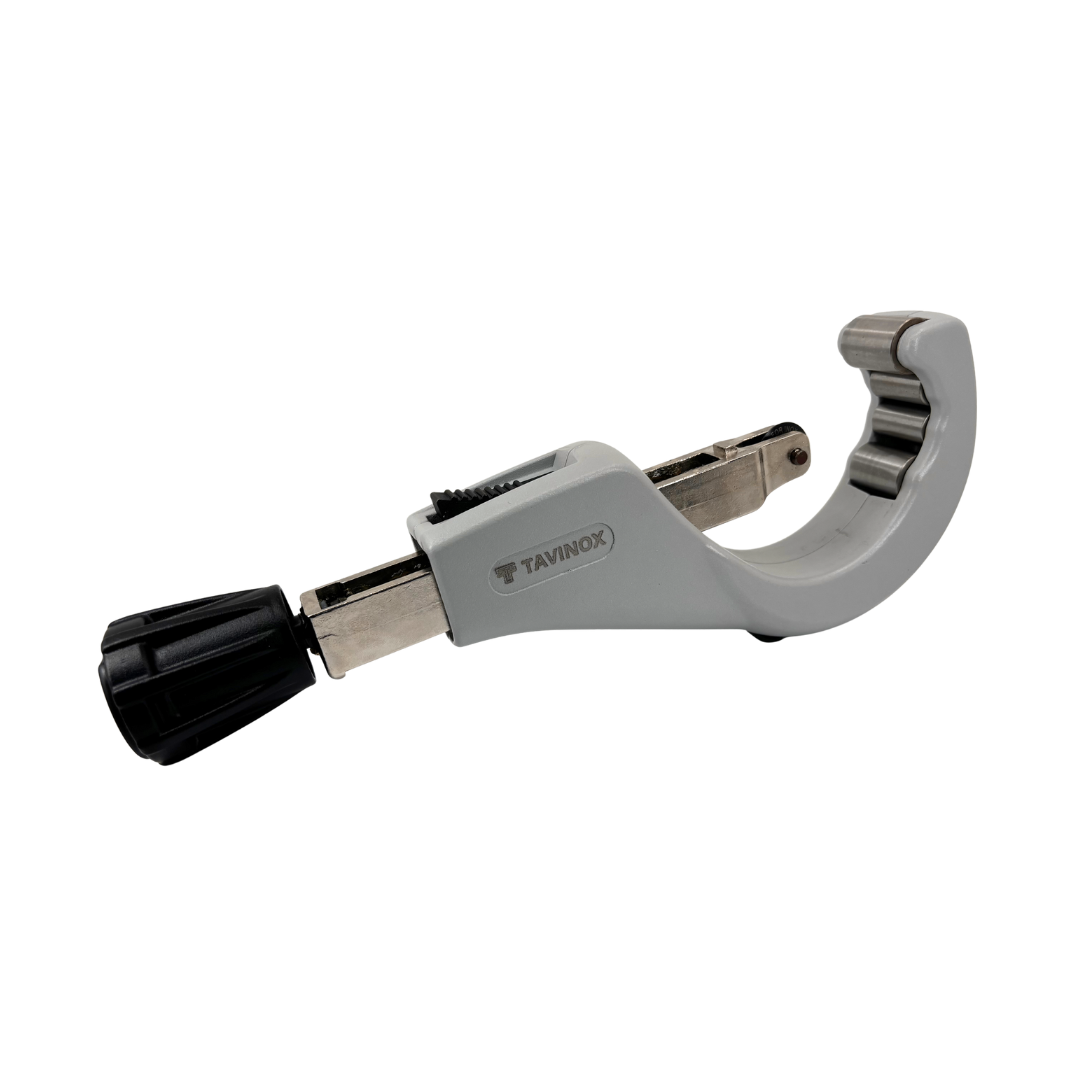
Cut the tube square
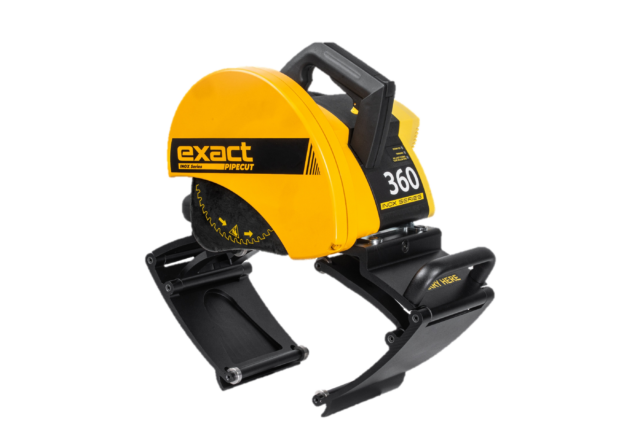
Cut the tube exactly square to its axis with a pipe cutter (never with an angle grinder or a saw — the heat destroys the passive layer of the stainless steel). The cut must be clean, free of burrs, with no rounding and no ovality. Discard offcuts shorter than 50 mm.
- 2
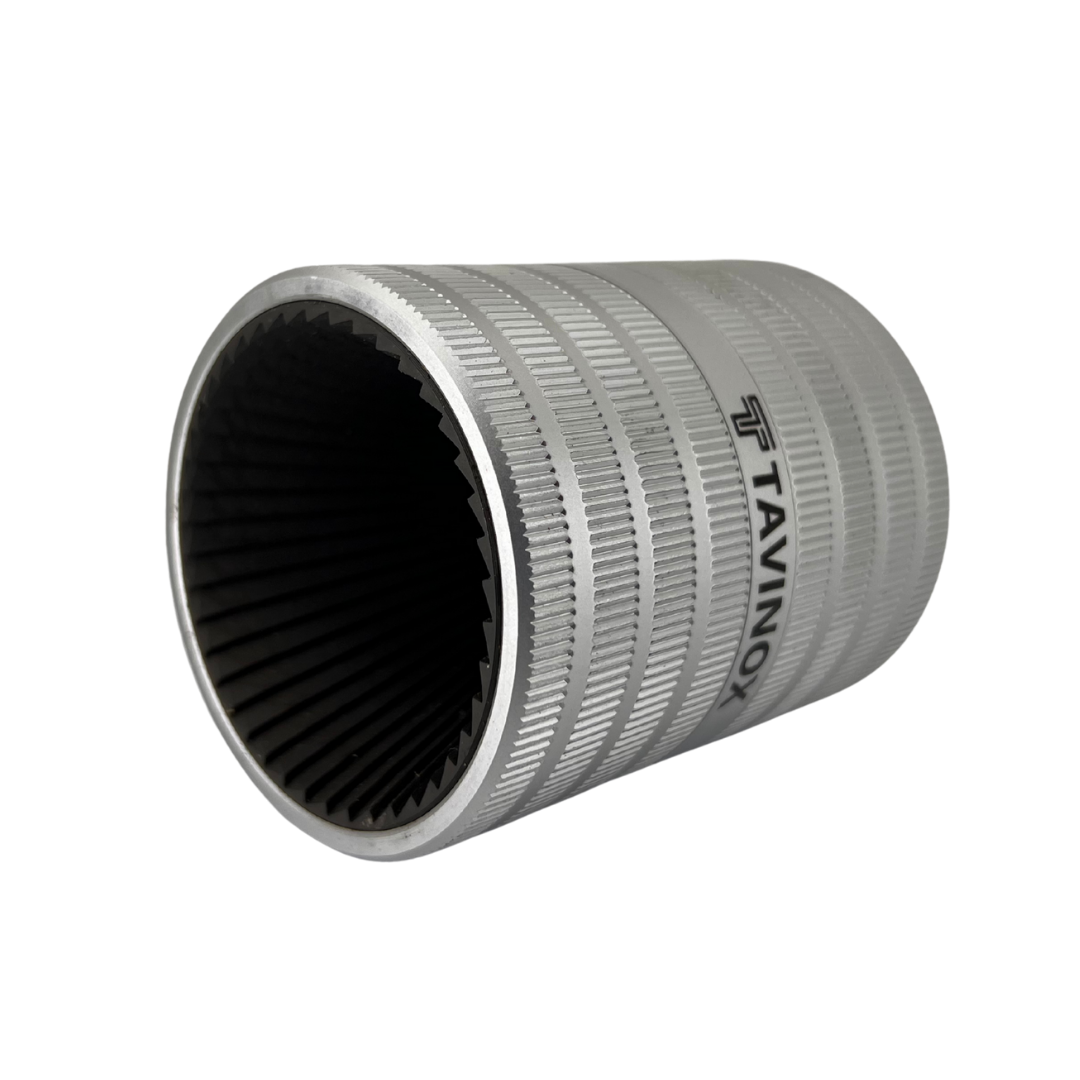
Deburr the tube inside and out
Remove every burr from the tube end, outside and inside, using a deburring tool. An external burr damages the EPDM seal, an internal burr restricts the flow and can cause corrosion. A smooth tube end is a precondition for a reliable seal.
- 3
Check the fitting and the O-ring
Inspect the TAVINOX PRESS fitting visually — the EPDM O-ring must be in place, clean, undamaged and free of grease. NEVER use a lubricant (silicone, petroleum jelly) — TAVINOX press fittings are pressed dry, as required by TI-001-EU.
- 4
Mark the insertion depth
Mark the insertion depth for the given size on the tube with a marker pen or a pencil (for example DN15 = 22 mm, DN22 = 25 mm, DN108 = 73 mm). The table of insertion depths is printed on the fitting packaging and given in the datasheet. Without the mark there is a risk of pressing too shallow, which can lead to leakage.
- 5
Insert the tube into the fitting up to the stop
Push the tube into the fitting with a slow twisting motion, up to the depth mark. If you feel resistance before reaching the mark, pull the tube out, inspect the O-ring and repeat. The mark must sit exactly at the edge of the fitting.
- 6
Press with the M-profile jaw
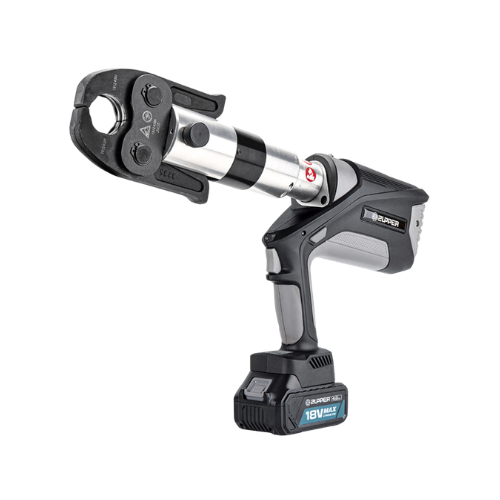
Place the press jaw of the matching size on the pressing zone of the fitting. Press the trigger of the machine (Zupper BLM-1930 19 kN up to DN28, ED-1550 32 kN up to DN54, ED-60100 65 kN up to DN108) and hold it until the cycle completes automatically (approx. 3 seconds). The machine signals the end of the press cycle with an LED and a tone.
- 7
Pressure test — Leak Detect
Once the pipework is finished, the installer carries out a pressure test in accordance with EN 806. TAVINOX PRESS with the Leak Detect O-ring is designed so that in the range 0.1–6 bar an unpressed joint is not leak-tight: it shows up at once as a visible leak and as the blue indicator on the fitting — any installation error is therefore revealed during the pressure test.
Downloads
TAVINOX PRESS Technical Manual
includes sections such as:
- Hygiene certificates and approvals
- Sizing of pipework to EN 806
- Installation guide for drinking water
- Leak Detect system — instructions for use
- Pressure testing and handover
“The piping through which drinking water flows should be chosen with that in mind, not based on what is cheapest at first glance.”
For drinking water distribution, stainless steel piping is not a premium option. It is the minimum that water — and the people who drink it — deserves.
Other application areas of the TAVINOX stainless steel system
Heating systems
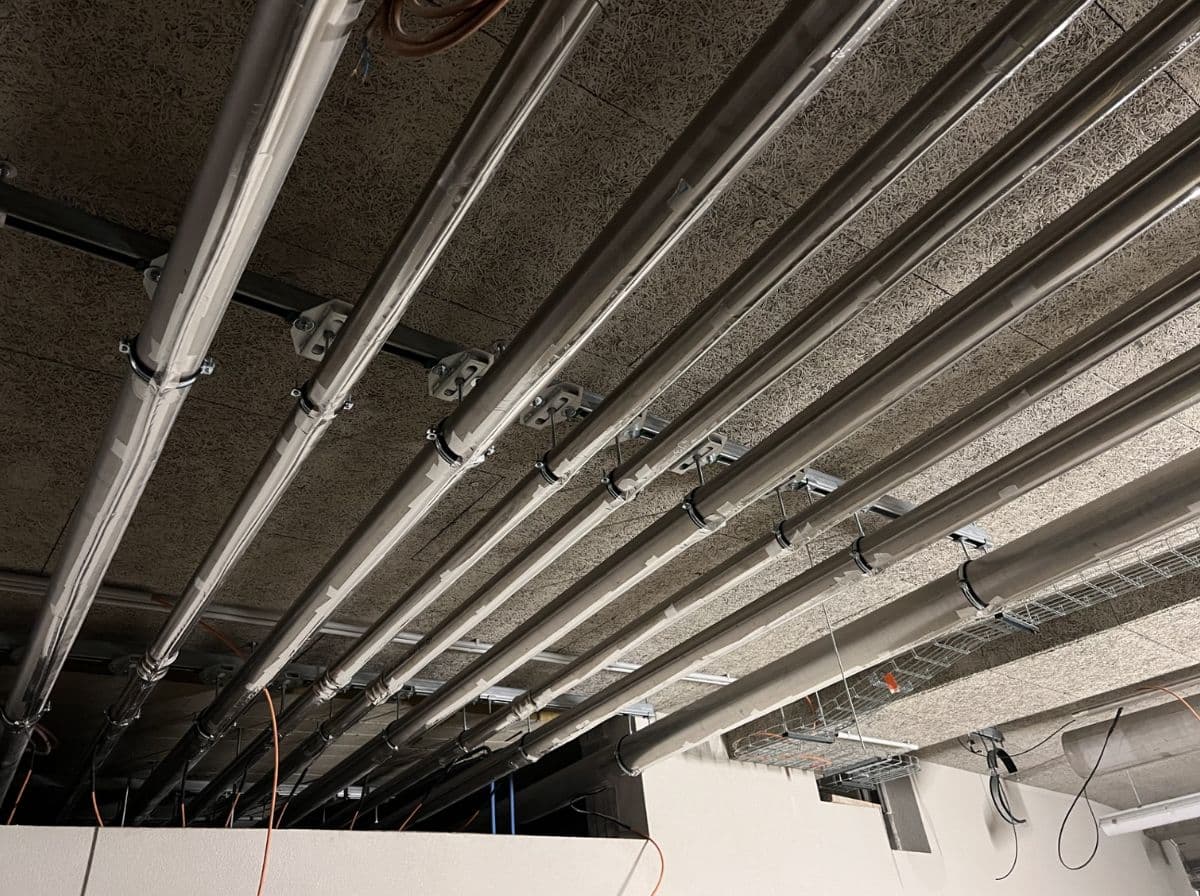
16 bar / 110 °C, EN 12828. Zero oxygen diffusion, clean heating circuit, no chemical water treatment.
More information
Cooling and air-conditioning pipework
6 bar / –10 °C. Resistant to external condensation, inert to water/glycol 50/50 mixtures.
More information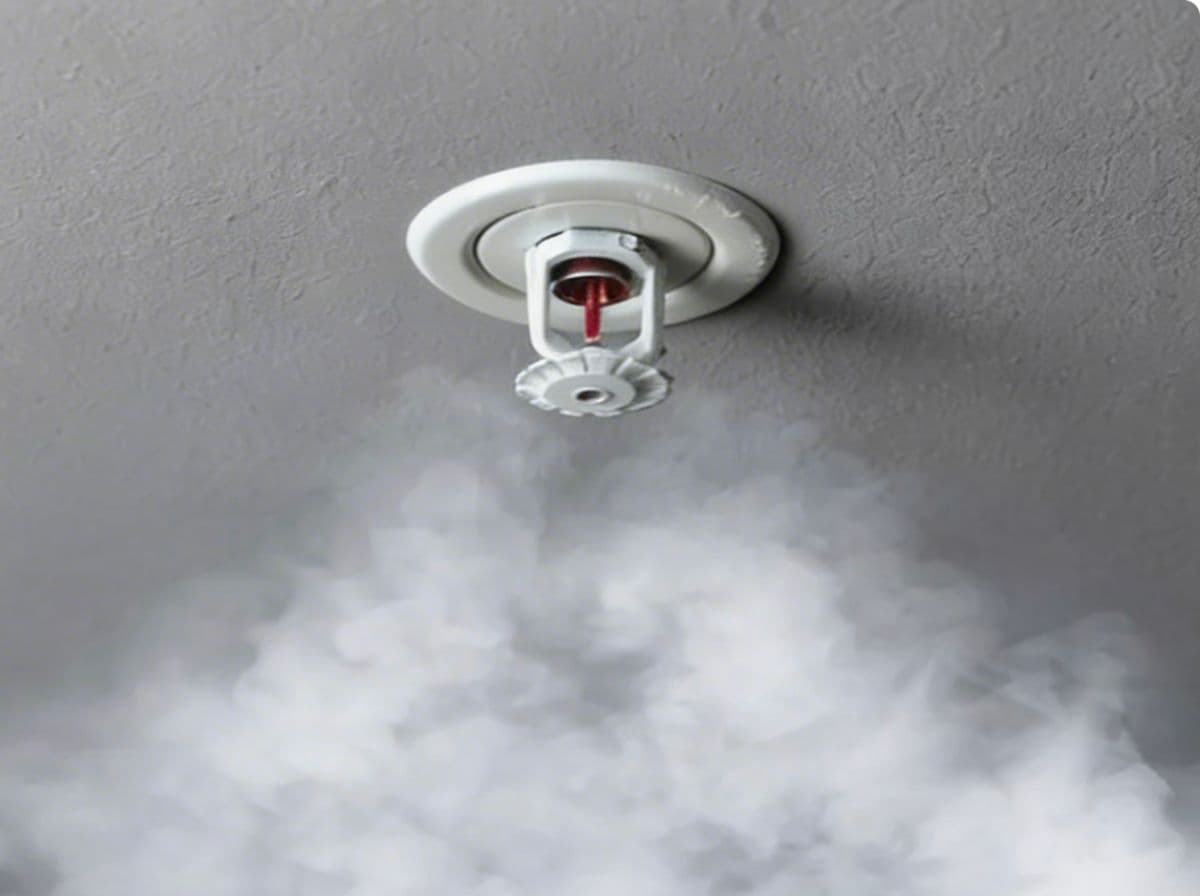
Fire protection pipework
PAVUS certification per VdS CEA 4001. Ø22–108 mm, wet and dry systems. Classes LH, OH1–OH4.
More information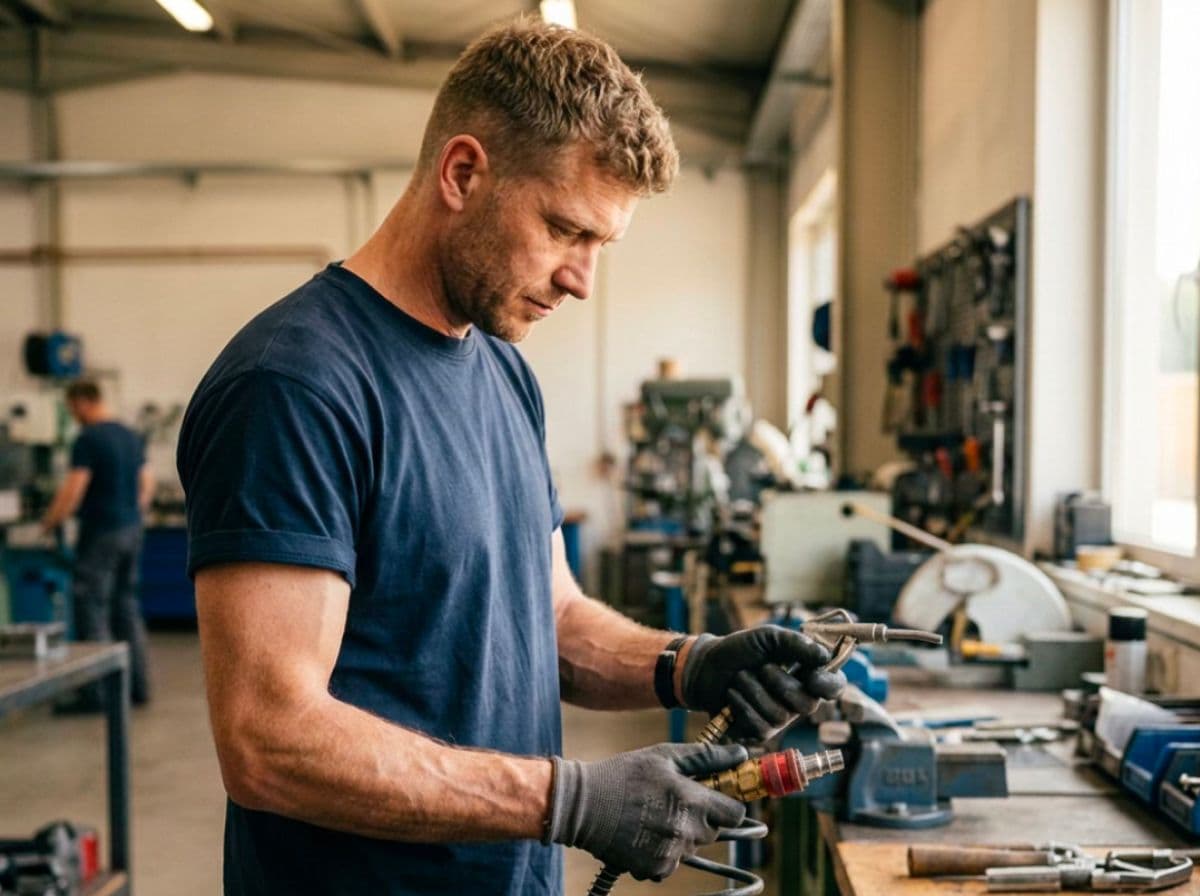
Compressed air distribution
10 bar / 60 °C, class 1–3 per ISO 8573-1. Vacuum to –0.8 bar. Zero internal corrosion, clean air without contamination.
More information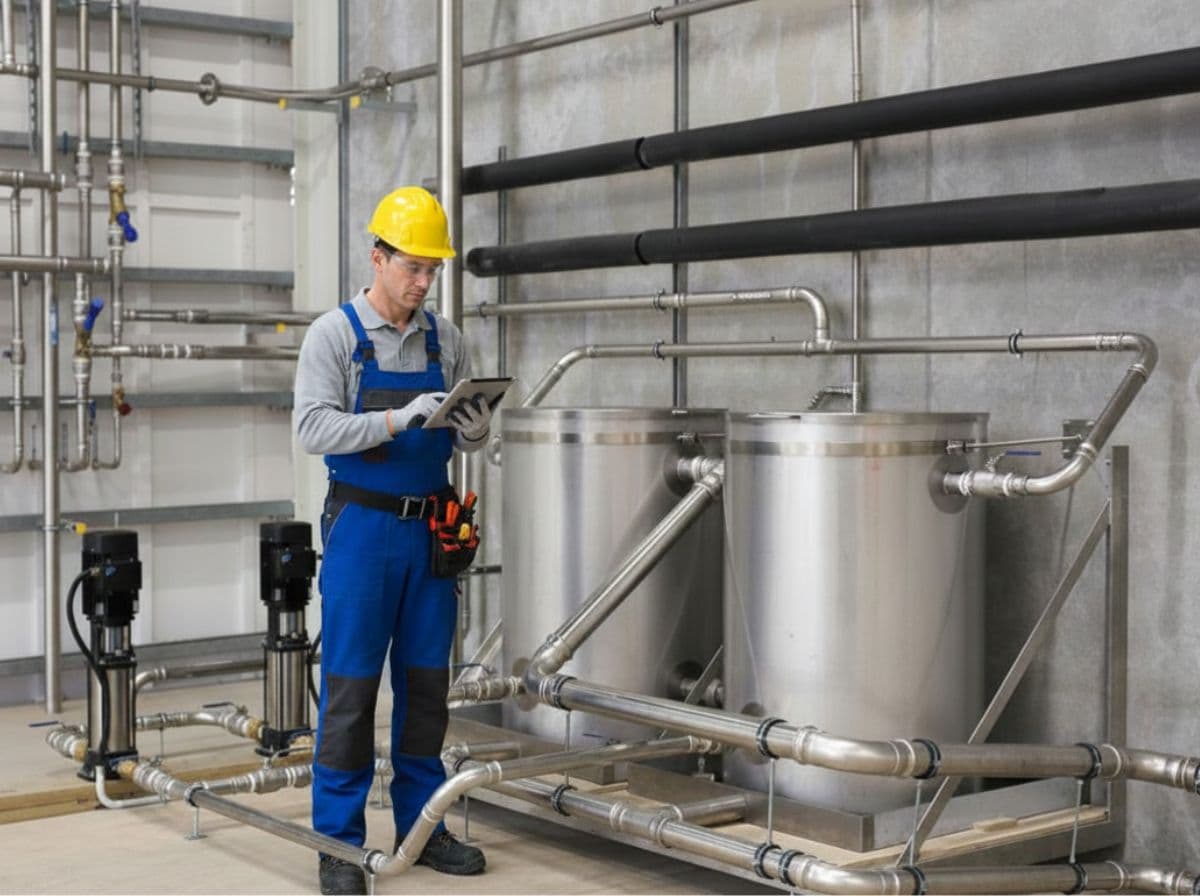
Heat pumps and solar systems
6 bar, –35 to +110 °C, short-term 200 °C. Inert to glycol mixtures, one material for both heat pump modes.
More information
Service and industrial water
Chlorides up to 600 mg/l, 16 bar / 110 °C. AISI 316L with 2–3 % Mo. Compatible with reverse osmosis, rainwater and pools.
More information